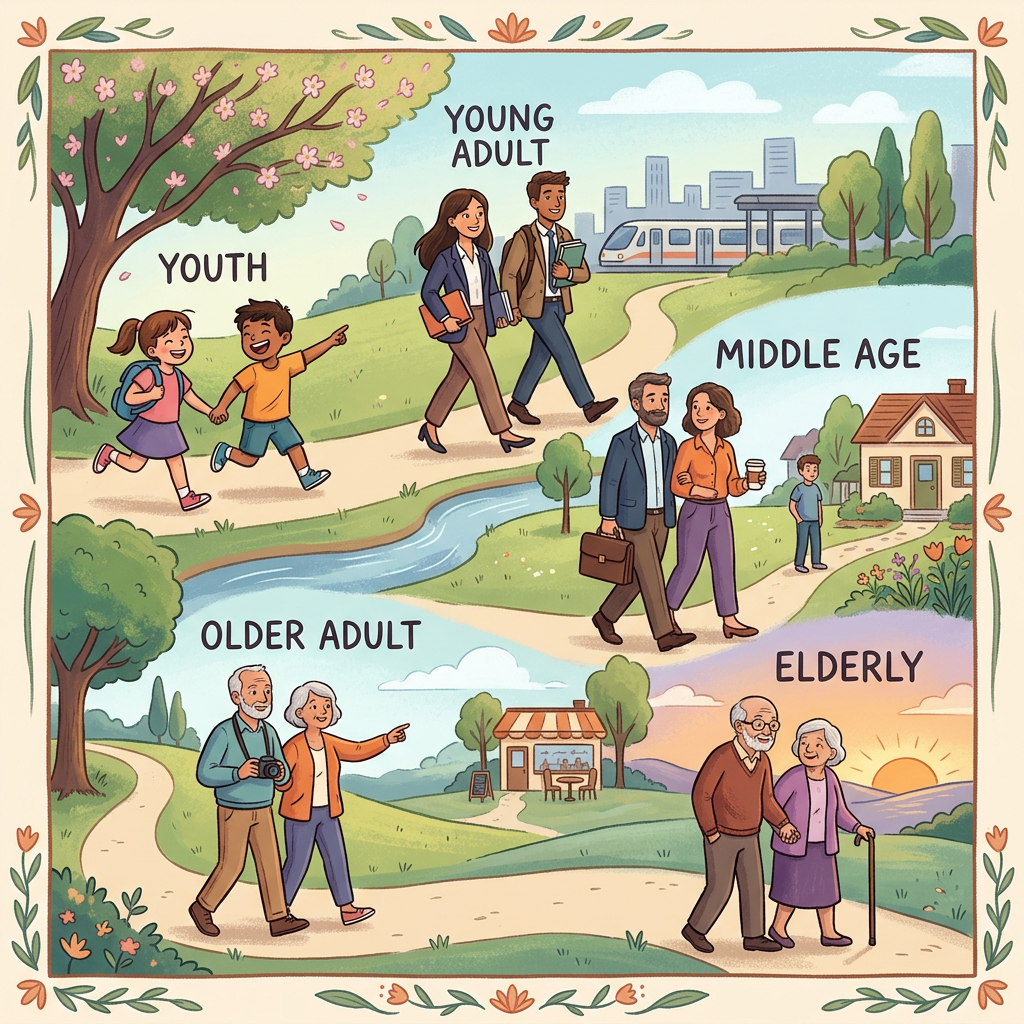
Your financial journey is a life long journey, it stays with you till the last day of your life. And its up to you how you want the journey to be, pleasant or an unpleasant one.
Every stage in your life has its own set of priorities and challenges that require planning proactively. Most of us have limited resources and the whole objective of financial planning should be to optimize or maximise it as must as possible. Now lets look at the various stages in our life
Your 20s and early 30s, you just finished your education, you are excited about earning money and being finally independent. Undeniably, there is eagerness to spend the money on all things that you always wanted to. Yes, indeed well deserved, however at the same time, this is the period of forming a strong base or building blocks for your financial plan. Developing strong financial habits will go a long way in building a strong financial foundation for you.
- Earn, Save, Invest and Repeat
- Keep credit card or debt usage as low as possible.
- Educate yourself about various financial products
- Set short term and long-term goals.
Having no or low responsibilities or liabilities at this stage in your life is a huge advantage, and you must make as much money work for you as possible. The key takeaway here is that the earlier you start, the more time you have to compound. The more you save and invest, the more your money will work for you.
Your mid 30s and 40s, In this phase, you will most likely be married, have a family, your financial goals have increased to include your family’s goals. At the same time, there would be rise in income as well. You need to build a strong financial plan that not only insulate you and your family from any emergencies but also help in growing wealth for long term. This phase is about financial resilience and financial growth.
- Build fences around you so that emergencies don’t dent your wealth making plans (Life and Health insurance and Emergency Fund)
- Keep a healthy Debt to Income ratio (Around 40 of your income as Debt would be good, anything above this will impact your saving and investment ability)
- Keep stepping up your investments
This phase requires you to change your investment gears to 3rd or 4th gear. Up until now you would mostly have a high risk-taking capacity and don’t be too conservative with your investments. This is the phase to disciplined and consistent with your investments.
Your 50s and 60s, If you had built a strong financial plan earlier on and stuck to it, then this phase would be comfortable. By now you should have ideally closed all your debt, so are debt free, thereby having more savings.
- Once again step up your investments,
- In this phase, you may want to put most of the contributions for your retirement
- You may want to look at writing a Will
In your late 50s and 60s most of your life milestones like House, automobiles, are done. You have already covered yourself for health.
Your 60s, Your high-income phase is now coming to an end, however the lifestyle that you have got accustomed to will still need money. The wealth you have accumulated so far needs to serve you for around 15 to 20 years at least. You need to be more prudent with your money. It is time to relax and reap the benefits of your financial plan.
- Do not get carried away with high return products (this tends to happen because you are free and looking for some entertainment or excitement)
- Stick to the financial products that you understand
- If you do come across some new financial product or scheme, please talk to someone you trust to understand about it more.
All throughout the financial journey, what’s most important is to be engaged with it, give your money direction so that it knows what to. Periodically reviewing your financial plan and letting it evolve along with your life is critical. Seek a Financial Advisors help who can handhold and guide you through the journey.


Leave a comment